


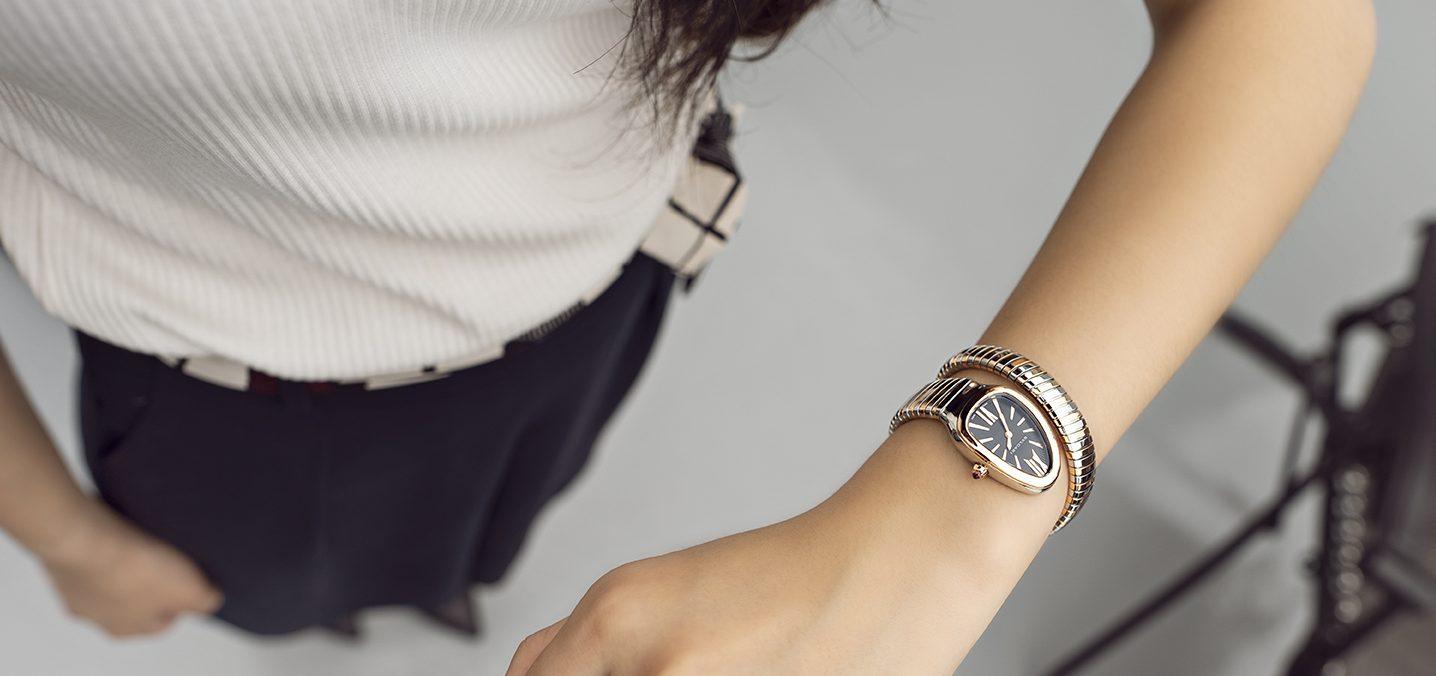
Popularised by the high-profile celebrities from the entertainment industry and sports field, diamond watches typically represent glamorous lifestyle. The most stylish diamond watches are born from the perfect alliance between two highly respected art-crafts: horology and high-jewelry. Diamond is extremely rare and it is the most challenging material to be work with. Lots of effort and man-hours are required to process each diamond stone before positioning it into a jewelry piece or a watch. Because of the complexity involved in manufacturing, only a limited number of brands offer diamond-set watches.
The following list consists of 10 most stylish diamond watches introduced in recent years: four for men and six for women.
For men
1. Piaget Polo Emperador Tourbillon High Jewellery

This exceptionally stylish diamond-set watch certifies the extensive expertise of House of Piaget’s Gem-setting craftsmen and the technical ingenuity of the manufacture’s extremely talented watchmakers. This timepiece features a cushion-shaped case measuring 49mm diameter. Inside the watch beats a skeletonized, ultra-thin mechanical hand-wound movement featuring tourbillon. This watch features gem-setting in its every part, including the movement. Made with 18 carat white-gold, its case and bracelet are adorned with blue sapphires and sparkling, brilliant and baguette cut diamonds. Even the parts of skeletonized movement are carefully set with glittering diamonds, and its platinum micro-rotor is adorned with blue sapphires.
Measuring just 6mm thickness, the ultrathin self-winding movement typically delivers 40 hours power reserve. The rear-side of the complex mechanical calibre is also set with splendid diamonds, and this magnificent view can be admired through the sapphire crystal case-back. The watch boasts a flying tourbillon complication at 1 o’clock and an off-centered dial at 5 o’clock with the hour and minute hands. In addition to the gem-setting, this high-end movement also incorporates fine horology finishing techniques like hand-bevelling, hand-polishing and sunburst-brushing.
2. Pasha de Cartier Diamond-Set Tourbillon Watch, Ref. HPI01435
Pasha de Cartier is a flagship collection from the House of Cartier. A quintessential example of the Maison’s watchmaking tradition, It offers exceptional timepieces, including some diamond-set watch models. Exclusively created for distinguished men, the watch featured in this exclusive list is set with 180 brilliant-cut diamonds.
Made with 18-carat gold, the 41mm diameter case houses a skeletonized manual-wound mechanical movement with tourbillon. Its bezel, crown, buckle and movement are adorned with precious diamonds. The gem-set skeleton calibre endowed with gem-setting, blued-steel diamond-shaped hands, distinct hour-markers and tourbillon offers this brilliant timepiece a unique appeal. The hand-wound calibre typically offers a power reserve of 50 hours. A salient feature of this diamond set watch for men is its easily interchangeable straps system.
3. Grand Seiko Masterpiece Spring Drive 8 Days Jewelry Watch
It is rather an unusual entry into this specific list as Grand Seiko rarely makes diamond set-watches. This particular diamond-set watch for men was launched to mark the iconic brand’s 60th anniversary in 2020. Painstakingly crafted at the Shinshu Watch Studio, it is one of the most beautiful diamond set watches ever made in the Land of the Rising Sun. This platinum wristwatch has a diamond-set 18 carat white gold dial inspired by the winter mornings in Shinshu.
The center portion of the dial features an extremely beautiful and sparkling “diamond dust” texture inspired by the minuscule ice crystals. This serene background faithfully depicts the shimmering winter mornings in the Shinshu region. Circled around this center-part is a large dial ring, which set with 48 baguette diamonds as minute markers and 12 blue sapphires as hour-markers.
Additionally, the dial also features an outer track, set with 48 small-sized diamonds and 12 miniature blue sapphires. In total, the watch features 96 baguette diamonds and 25 sapphires, including one that is placed on the crown. Its 43mm diameter case is meticulously finished with a Zaratsu polishing technique especially used for platinum models. Beating inside this magnificent timepiece is a hand-made mechanical manual-winding Spring Drive movement that offers an outstanding autonomy of 8 days.
4. Hublot Spirit of Big Bang High Jewellery
Do you like Hublot Spirit of Big Bang? This timepiece is itself a rare creation in our list of stylish diamond-set watches. Featuring prominently a distinct tonneau shaped exterior, this high-end timepiece merges sophisticated gem-setting with the extremely complex chronograph skeleton movement. Made from 18-carat white gold, the case is set with 118 baguette-cut diamonds. In addition, a dazzling array of 60 baguette-cut diamonds adorns the bezel.
Its dial boasts a complex design incorporating white gold and sapphire crystal, which amply provides the mesmerizing views of self-winding skeleton chronograph movement. Total 113 baguette-cut diamonds were used to adorn the flange, indices and the three sub-dials. Beating at a high frequency of 5Hz, the automatic movement provides a power reserve of 50 hours. The watch is available with a rubber or alligator strap. The 18-carat white gold clasp is also set with 55 baguette-cut diamonds.
For women
1. Patek Philippe Twenty~4 Haute Joaillerie
The Patek Philippe Twenty~4 collection traditionally offers some elegant and stylistic ladies’ watches. Introduced in 1999, this line also includes some dramatic diamond-set wristwatches, including the Twenty~4 Automatic Rose Gold Haute Joaillerie watch unveiled in 2019. The superbly crafted 18-carat rose gold version boasts 3,238 sparkling diamonds!
This 36mm high-jewelry wristwatch for women is fully paved with Top Wesselton diamonds using the extremely difficult Random setting. Its rose gold case is set with 351 diamonds. Adorned with 384 glittering diamonds, the dial features golden numerals and hands. The watch displays hour, minutes and seconds. Its hour and minute hands feature high-quality luminescent coating for ensuring optimum dial visibility in the dark. Its time-setting crown is set with 13 diamonds. The watch houses a highly decorated self-winding movement with a solid rose gold rotor. The rose gold bracelet of the watch is adorned with 2,490 magnificent diamonds.
2. Bvlgari Serpenti Incantati Tourbillon Lumière, White Gold, diamond set watch (Ref. 102541)
This extremely beautiful diamond-set watch undoubtedly represents the pinnacle of luxury watchmaking by merging high-jewelry craftsmanship. This diamond-set Bvlgari watch for men boasts a high-end mechanical movement, endowed with a tourbillon complication and skeletonized architecture. The Serpenti line wristwatches are known for their seducing designs inspired by the mythological world of serpents. In this sparkling creation, a mesmerizing serpent structure assumes the shape of round watch case. This design harks back to a beautiful brooch produced by the iconic Roman Jewellery in the 1930s.
The 18-carat white gold case of the Serpenti Incantati Tourbillon Lumière watch is set with 237 brilliant cut diamonds and two tanzanites. The complex skeleton tourbillon movement is crafted with 18-carat gold and steel. The open-worked dial incorporates two hands surrounded by an 18-carat white gold segment with purple PVD coating. The wearer can admire a spectacular tourbillon complication at 6 o’clock. Providing an impressive power reserve of 64 hours, this manual-wound mechanical movement incorporates brilliant finishing techniques. The 18-carat white gold buckle of the alligator strap is set with 28 brilliant-cut diamonds.
3. Rolex Pearlmaster 39 (Ref. 86409RBR)
This dazzling ladies’ timepiece is an ultimate compendium of Rolex’s extensive expertise in two sectors: precision watchmaking and gem-setting. This 18-carat white gold timepiece is adorned with glittering diamonds all over, including the case, the dial, lugs and the bracelet. It is equipped with a high-precision manufacture self-winding movement, which typically provides an impressive 72 hours power reserve. The sparkling gem-set watch has a 39mm diameter case.
Although conceived as a sophisticated diamond-set timepiece, it steadfastly maintains all the typical features of a Rolex Datejust watch: Superlative Chronometer certification, Cyclops lens for the date window and 100 meters water resistance. All the diamonds are certified by Rolex’s own gemological laboratory. Also available with 18-carat yellow gold or the proprietary Everose gold, the Pearlmaster 39 watch is provided with a comfortable bracelet featuring the concealed crown clasp.
4. Winston Kaleidoscope High Jewelry Watch by Harry Winston
Harry Winston is traditionally known for its extremely beautiful and diamond-set high-jewelry watches. In 2020, Harry Winston introduced five sparkling diamond-set watches inspired by the magical aesthetics of Kaleidoscope. Among them, two versions boast a beautiful spiral shaped exterior adorned with splendid diamonds and colorful gemstones.
On its enticing and magical spiral structure, the first model features 42 tsavorites, 29 blue sapphires, 28 orange spessartites, 14 diamonds and 14 yellow sapphires. The second version hosts 36 blue sapphires, 28 diamonds, 21 aquamarines, 21 pink sapphires, 14 rubies and seven tsavorites.
Made from platinum, the 36mm diameter case houses a high-end quartz calibre, which drives hour and minute hands. The 18-carat gold dial is fully set with 71 brilliant-cut diamonds. The satin strap features a platinum buckle, which is adorned with 29 brilliant-cut diamonds. Both watch models are topped with sapphire crystal glasses.
5. Chopard L’Heure du Diamant Rose Gold Automatic Diamond Set watch
Chopard‘s L’Heure du Diamant collection has been dedicated to beautiful diamond-set, high-jewelry watches for women. All timepieces from this line feature gem-set cases. This line graciously offers some of the most beautiful dials with exquisite materials like Opal, Lapis Lazuli, malachite, turquoise, Onyx, Tiger’s eye and mother-of-pearl. The collection also includes a number of models featuring diamond set dials. The timepieces may be equipped with automatic or manual wound or quartz movements. The case can be small or medium sized, with choices of oval or round shapes.
The specific model in our list is a medium size, round case, rose-gold automatic watch set with magnificent diamonds. Its case is adorned with 40 diamonds using Prong-setting technique. Its dial is semi-paved with diamonds and features a mother-of-pearl guilloche center. This timepiece indicates the hour and minute with two sword-shaped golden hands. The hour-markers are beautifully placed on the diamond-set dial-ring. The crown is topped with a diamond briolette. Through the sapphire crystal case-back, you can admire the automatic movement, which typically delivers 40 hours power reserve. This watch is fitted with an 18-carat rose gold bracelet featuring folding buckle.
6. Maillon de Cartier Diamond set watch
The Maillon de Cartier is an exclusive watch collection dedicated to modern women. These watches stand out with their atypical features like hexagonal dial, facetted case design and chain-link bracelet. Made from 18-carat pink or white gold these timepieces house quartz movements. The miniature case of each Maillon de Cartier watch is secured with a stylish chain-link bracelet designed in-house. This gleaming and extremely smooth bracelet is also comfortable for wearing. The Maillon de Cartier offers some lovely diamond set wristwatches.
The specific model featured in this list is a white gold watch, entirely set with a delightful combination of sparkling diamonds, gem-stones and lacquer decorations. The luxury Maison’s expert gem-setters used 300 brilliant-cut diamonds and 96 tsavorites to adorn the case, the dial and the bracelet of this extremely beautiful watch. The beautiful lacquer decorations and gem-setting provide the timepiece an extremely stylish appearance. Its crown is set with a brilliant-cut diamond. It however maintains a minimalist dial display using two sword-shaped hands.
Leave A Reply
Your email address will not be published.
Thank you for your comments
We have received your comment and it is being processed.Oops, Something Went Wrong
Please try again later.